Services Our Process About Request a Quote
← Back to Services

3D BIM Models
(Revit)

Accurate as-built BIM models produced in Autodesk Revit from measured survey and point cloud data — supporting design coordination, refurbishment and project development.
Request a Quote FAQs
Revit
Primary Output
RVT
Native Format
IFC
Open BIM
LOD
Agreed Upfront
3D
Model Produced
3D BIM Model — Autodesk Revit

Add photo: bim-hero.jpg

Recommended 1400 x 600px

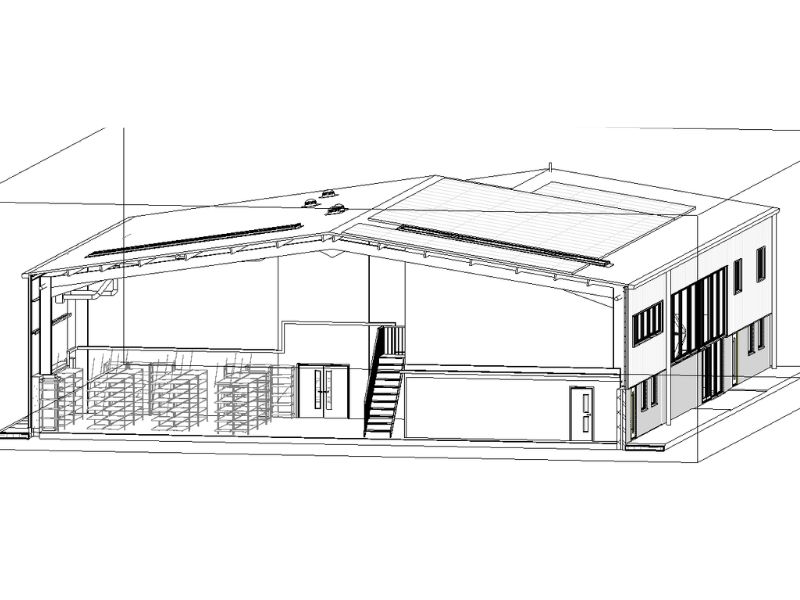
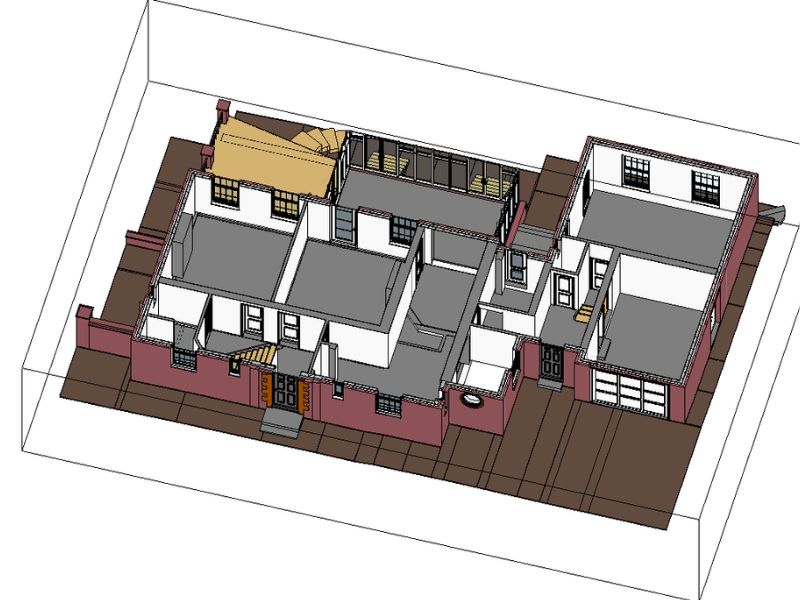
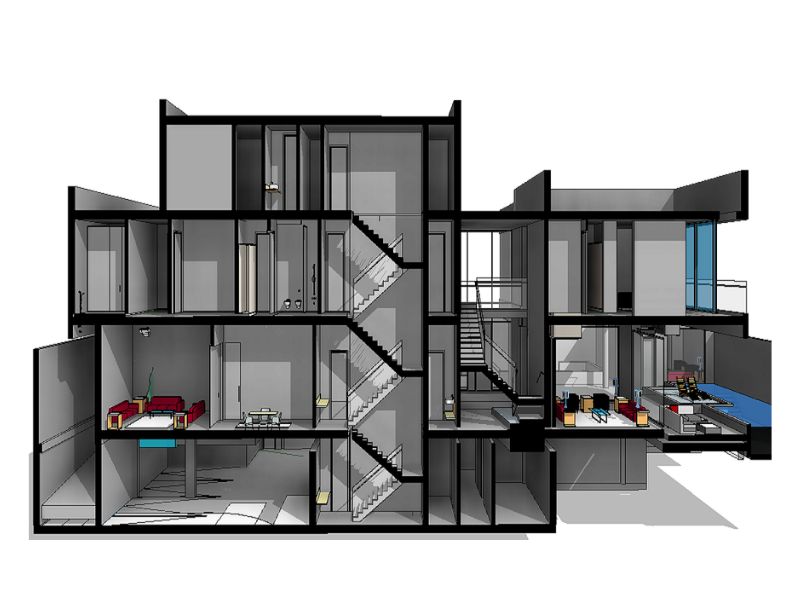
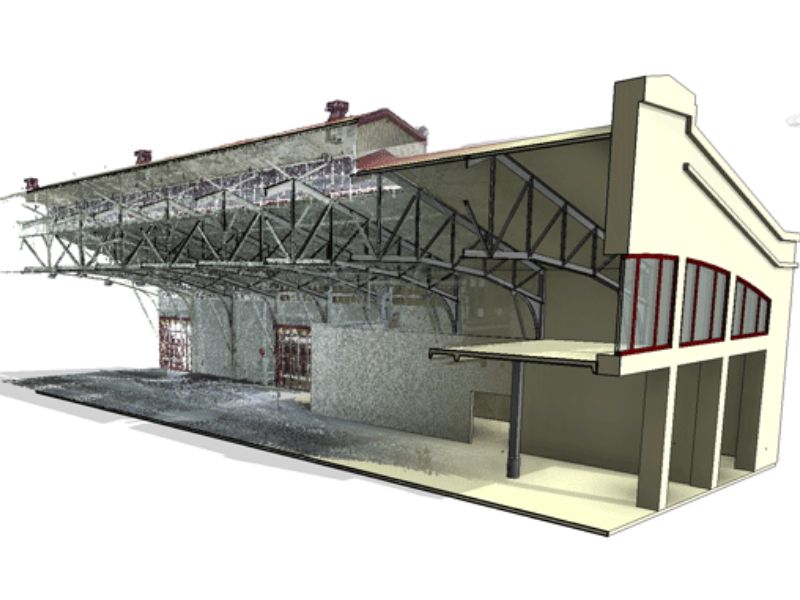
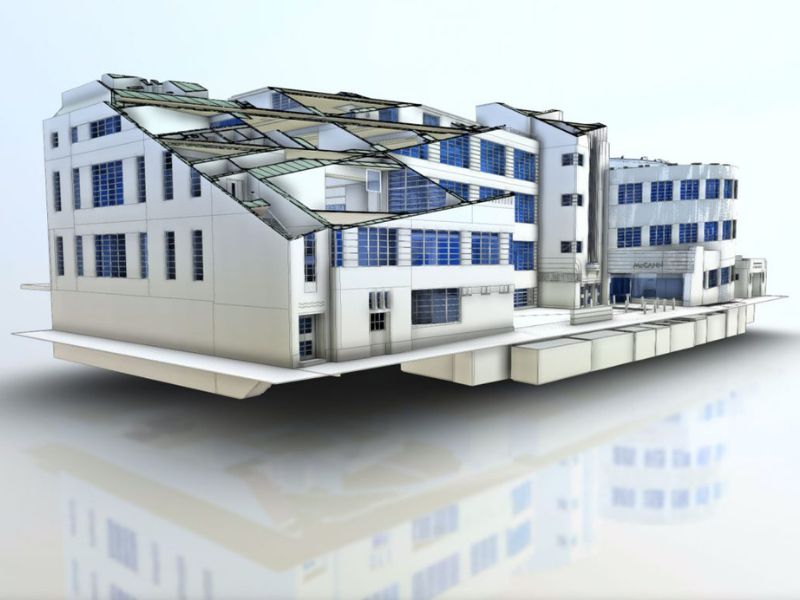
As-built BIM model produced in Autodesk Revit from point cloud and survey data — accurate, structured and ready for design coordination.

Revit RVT IFC Export 2D Drawings LOD Agreed

What is a 3D BIM Model?

A 3D BIM (Building Information Model) is a digital model that represents the physical and spatial characteristics of a building. When produced from measured survey and point cloud data, it provides an accurate, data-rich representation of existing conditions that design teams can work directly from.

Unlike CAD drawings, a BIM model is three-dimensional and intelligent — walls, floors, doors, windows and structural elements are modelled as real objects, allowing 2D drawings, sections and schedules to be extracted directly from the model rather than drafted separately.

What We Can Provide

Our BIM modelling services are tailored to suit the requirements of each project. Depending on your needs, we can provide:

  • As-built BIM models of existing buildings
  • Existing conditions models for refurbishment and retrofit
  • Models generated from measured survey and point cloud data
  • Level of detail agreed to suit the intended project stage
  • 2D/3D drawings extracted from the model (plans, elevations, sections)
  • Models structured for practical design team use
  • IFC export for open BIM workflows where required

What We Model

  • Existing residential and commercial buildings
  • Refurbishment and retrofit projects
  • Complex architectural layouts
  • Heritage and listed buildings
  • Industrial and institutional buildings

Level of Detail (LOD)

The level of detail in the BIM model is agreed at the outset to ensure it is appropriate for the project stage and intended use. Typical levels we work to include:

  • Concept-level massing models for feasibility and planning
  • Detailed as-built models with walls, floors, openings and structural elements
  • Coordinated models suitable for design development and clash detection

We discuss LOD requirements with you at enquiry stage — there is no standard approach, and the right level of detail depends entirely on how the model will be used.

Our BIM Process

1

Accurate Data Capture

BIM models are built from verified survey data — either from a measured building survey, 3D laser scanning, or a combination of both. Using point cloud data as the modelling base ensures the resulting model accurately reflects the existing building geometry.

2

BIM Modelling & Quality Assurance

Models are developed in Autodesk Revit to the agreed level of detail, with quality checks carried out throughout to ensure accuracy, consistency and correct model structure. All elements are modelled against the verified survey data.

3

Reliable Delivery

The completed Revit model is issued in agreed formats — RVT, IFC or DWG extracted drawings — within agreed timescales, ready to be used directly within your design team's workflow.

Why Choose SurveyX

Industry-Standard BIM Workflows

All models produced in Autodesk Revit — the industry-standard platform used by architects, engineers and contractors across the UK and internationally.

Survey-Verified Accuracy

Models built from our own measured survey and point cloud data — not scaled from existing drawings or estimated. Every element is referenced against verified site measurements.

Practical, Usable Models

We focus on producing well-structured models that your design team can work with immediately, with clear naming conventions and a logical model organisation.

LOD Agreed at Outset

We agree the level of detail before work starts — ensuring the model is exactly what you need for its intended use, with no unnecessary complexity or missing information.

Experience Across Building Types

We have experience modelling residential, commercial, industrial and heritage buildings — adapting our approach to suit each building's age, condition and complexity.

In Depth

What is an As-Built BIM Model?

A BIM (Building Information Model) is a three-dimensional digital model of a building where every element — walls, floors, roofs, columns, doors, windows — is represented as an intelligent object with geometry, position and information attached to it.

An as-built BIM model represents a building as it currently exists, produced from measured survey and point cloud data rather than from design intent. This gives design teams an accurate, three-dimensional working environment that reflects real existing conditions — from which floor plans, elevations, sections, schedules and 3D views can all be extracted directly from the model.

All our BIM models are produced using Autodesk Revit — the industry-standard BIM authoring platform used by architects, engineers, contractors and facilities managers across the UK. Models are structured to integrate directly into professional design workflows without significant rework.

How We Build Your BIM Model

Our as-built BIM models are built from verified survey data using a disciplined, quality-checked modelling workflow in Autodesk Revit. Here is how we work from survey to delivered model.

Survey data foundation

Every BIM model we produce is built from verified site data — either from our own measured survey, a registered point cloud from laser scanning, or a combination of both. We never model from unverified existing drawings or assumptions. The quality of the model reflects the quality of the survey data beneath it.

Point cloud to Revit

Where laser scan data is available, the registered point cloud is loaded directly into Revit. We model walls, floors, ceilings, roofs, structural elements, doors and windows by tracing and fitting Revit families and components to the scan data — ensuring the model geometry matches the actual building.

Level of Detail (LOD)

The level of detail in the model is agreed at the outset. LOD 200 captures approximate geometry and is suitable for early feasibility. LOD 300 captures specific geometry — exact wall thicknesses, opening sizes, structural element dimensions — for design development and coordination. We discuss and agree the appropriate LOD for your project before work starts.

Model structure and organisation

Models are structured with a clear level and grid setup, logical family naming, and organised views — floor plans, sections, elevations and 3D views — ready for use. We follow Revit best practice to ensure the model works cleanly in your team's software environment.

Quality assurance

The completed model is reviewed against the survey data to verify that geometry is correctly represented and that no significant elements have been missed. Discrepancies between the model and the survey data are resolved before delivery.

2D drawing extraction

Floor plans, elevations and sections can be extracted directly from the model as fully annotated DWG drawings — eliminating the need to produce 2D drawings separately and ensuring complete consistency between the model and the drawings.

Why Commission a BIM Model

The Value of an As-Built Revit Model

01

Design in 3D from day one

An existing conditions model gives your design team a fully three-dimensional working environment from the start of the project — enabling 3D design, clash detection and coordination that is simply not possible with 2D drawings alone.

02

Extract any drawing instantly

Floor plans, elevations, sections and schedules are all extracted directly from the model. Any change to the model is reflected immediately in all drawings — eliminating inconsistency between drawing sheets.

03

Coordinate across disciplines

A shared existing conditions model gives all consultants — architect, structural engineer, MEP — a common, accurate reference. Coordinating new design work against a shared model dramatically reduces the risk of inter-discipline clashes.

04

Enable clash detection

New structural, services and architectural elements can be checked for clashes against the existing building model before construction begins — finding and resolving problems at the design stage rather than on site.

05

Support future works

An as-built Revit model is a long-term asset. It supports future refurbishment, fit-out, extension and maintenance planning — reducing the need to re-survey the building for subsequent projects.

06

Satisfy BIM requirements

Many public sector and large commercial projects now mandate BIM deliverables. An as-built Revit model of existing conditions is frequently the first step in meeting a project's BIM requirements.

What Goes Wrong Without an Accurate BIM Model

As-built BIM models are increasingly the norm on refurbishment and retrofit projects. Here are the problems that arise when existing conditions are not properly captured in 3D.

Modelling from unverified drawings

Building a design model on top of existing drawings that have never been verified against the actual building is a significant risk. Errors in the base drawings become embedded in the design — and discovered on site.

2D-only coordination

Coordinating complex refurbishment projects using only 2D drawings leaves a large number of spatial conflicts undetected until construction. Pipes, ducts, structural elements and architectural finishes clash in three dimensions, not two.

Re-modelling for each project

Without a permanent as-built model, each new project involving the same building starts from scratch. Maintaining an accurate Revit model eliminates repeated survey and modelling costs.

Inaccurate energy modelling

Building energy models require accurate geometry. Models produced from unverified drawings or approximate dimensions produce inaccurate energy analysis — undermining decarbonisation and retrofit planning decisions.

Facilities management without spatial data

Facilities and estates teams managing buildings without accurate 3D models lack the spatial context needed to plan works efficiently — leading to wasted time and avoidable costs.

Pricing Guidance

What Affects the Cost

BIM model costs depend on the source data, building size and required level of detail. We agree scope and LOD at the outset so there are no surprises.

Source data

Models produced from existing point cloud data cost less than a combined survey-and-model commission. If you already have scan data, we can model directly from it.

Building size and complexity

Larger buildings with more floors, rooms and complex elements take longer to model. Irregular geometry — curved walls, complex roofs — adds modelling time.

Level of Detail (LOD)

LOD 200 concept models cost less than LOD 300 detailed models. The right LOD depends on how the model will be used — we discuss this with you upfront.

2D drawing extraction

Extracting and annotating a full set of 2D drawings from the model adds time but delivers significantly more value — particularly if the drawings are needed for planning or construction.

IFC export and compatibility work

Preparing the model for IFC export or adapting it for a specific software environment may add a small amount of time to the overall programme.

Turnaround time

BIM modelling is time-intensive. Standard delivery is typically 2–3 weeks from receipt of survey data, depending on building size and complexity.

Get a clear quote

Tell us about your building, what survey data you have and what you need the model for. We'll provide a clear, competitive quote within 1 working day.

Request a Free Quote
Who This Service Is For

Built for Design Teams

Architects

Accurate existing condition models to design from — no separate base drawing required.

Structural Engineers

Geometrically accurate 3D models for structural analysis and coordination.

BIM Coordinators

Well-structured existing conditions models ready for multi-discipline coordination.

MEP Engineers

Existing building model to plan services routes and identify spatial constraints.

Developers

Detailed existing conditions models to inform refurbishment feasibility and costing.

Facilities Managers

Accurate as-built models for estates management, maintenance planning and space management.

Common Applications

When You Need an As-Built BIM Model

As-built BIM models are increasingly required on refurbishment and retrofit projects. Here are the most common scenarios where they deliver real value.

Refurbishment & Retrofit

An accurate existing conditions model lets the design team plan proposed works with full spatial awareness — identifying constraints, coordinating services and reducing the risk of on-site surprises.

Multi-Discipline Coordination

A shared BIM model of existing conditions gives all consultants — architect, structural, MEP — a common, accurate reference from which to develop their designs simultaneously.

Clash Detection

Modelling new works within an accurate existing conditions model allows clashes between proposed structure, services and existing building fabric to be identified and resolved before work begins on site.

Planning & Heritage Applications

BIM models can be used to produce accurate and consistent drawings for planning submissions, listed building consent applications and heritage impact assessments.

Facilities & Asset Management

An as-built Revit model of an existing building provides a lasting asset record — supporting space management, maintenance planning and future capital works.

Energy & Environmental Analysis

Accurate building geometry is a prerequisite for meaningful energy modelling and environmental performance analysis — particularly important on retrofit and decarbonisation projects.

Frequently Asked Questions

Common Questions

We use a current version of Autodesk Revit. If you need the model delivered in an older version for compatibility with your team, just let us know at enquiry stage and we can save back to an earlier version where required.
Where models are produced from our own survey and point cloud data, accuracy is directly linked to the quality of the underlying survey — typically ±3–6mm for laser scan-based models. All elements are modelled against verified site measurements, not scaled from existing drawings.
LOD (Level of Detail) describes how much geometric and information content is in the model. LOD 200 is suitable for early design and feasibility; LOD 300 captures specific size, shape and location of elements for construction coordination. If you're unsure what LOD you need, we're happy to advise based on your project.
Yes. Floor plans, elevations, sections and roof plans can all be extracted directly from the Revit model and issued as DWG and PDF drawings. This can be included as part of the BIM model package or requested separately.
Yes. IFC export is available for all Revit models, enabling use in open BIM workflows and non-Autodesk platforms such as ArchiCAD, Vectorworks and various engineering software. Just specify the IFC version required when enquiring.
No. Our BIM models are built from verified site survey data, not from existing drawings. Any existing drawings you have can be helpful as background reference, but the model geometry is always verified against measured data from the building itself.

Request a BIM Model Quote

Tell us about your project and we'll respond with a clear, competitive quote within 1 working day.

✓  Autodesk Revit delivery
✓  IFC & DWG extraction available
✓  UK Wide Coverage

We respond to all enquiries within 1 working day.